

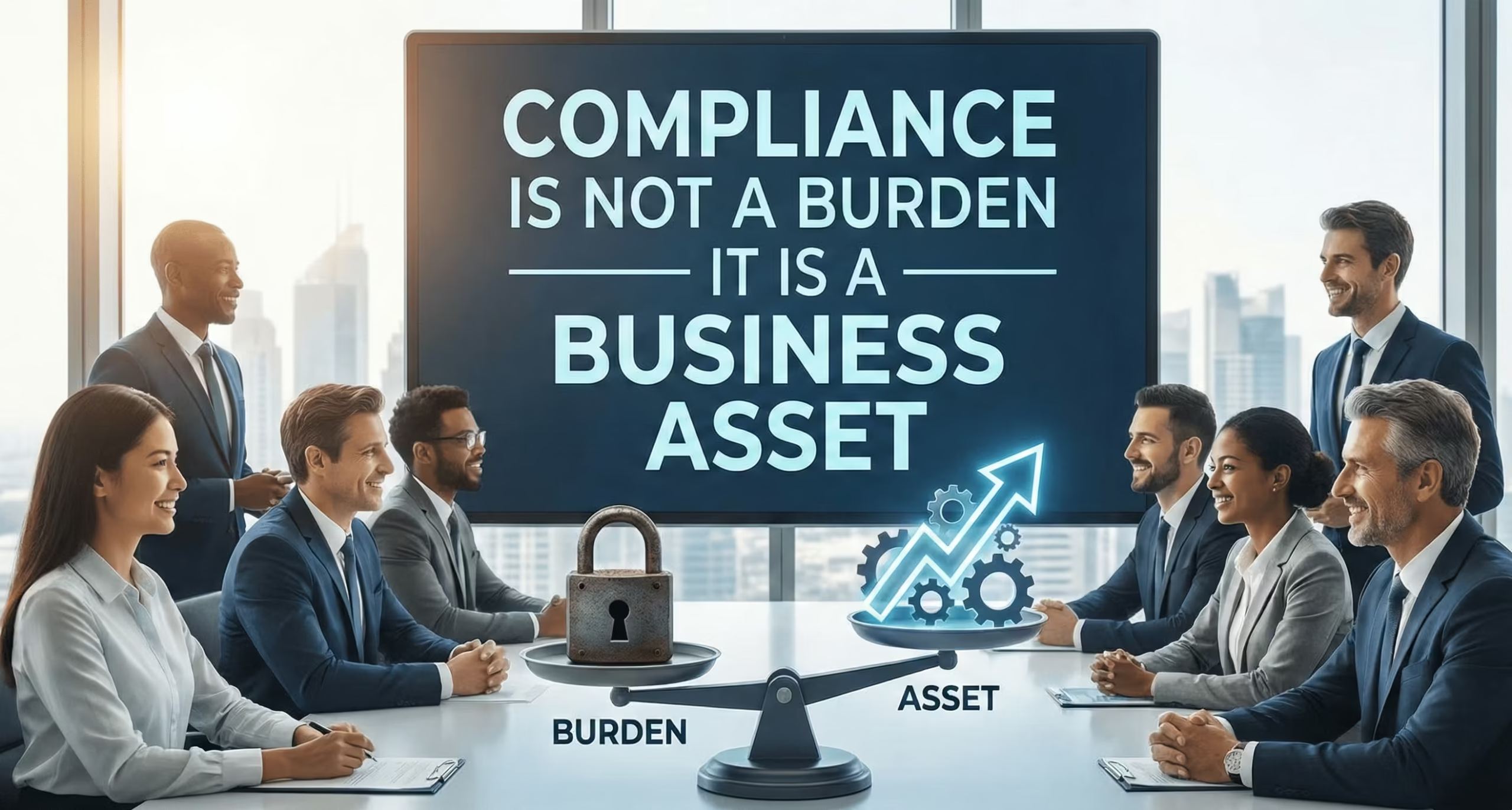
For many businesses, compliance is often viewed as a necessary inconvenience — a checklist of filings, deadlines, and statutory obligations that must be completed to avoid penalties. This perception, however, significantly understates the true value of compliance.
When approached correctly, compliance becomes a powerful business asset that enhances credibility, governance, and long-term sustainability.
Why Compliance Is Often Misunderstood
Compliance is frequently treated as:
- A year-end or deadline-driven activity
- A cost center rather than a value contributor
- A reaction to regulatory pressure rather than a proactive discipline
This mindset leads to fragmented processes, last-minute filings, and unnecessary exposure to risk.
Compliance as a Foundation of Business Discipline
At its core, compliance enforces financial and operational discipline.
Regular and timely compliance ensures:
- Accurate financial records
- Transparent reporting
- Accountability across functions
- Early identification of errors or inconsistencies
This discipline strengthens the internal health of the business well before any external scrutiny arises.
Enhancing Credibility with Banks and Investors
One of the most tangible benefits of strong compliance is improved credibility with external stakeholders.
Banks and investors assess:
- Timeliness and accuracy of statutory filings
- Consistency in tax and regulatory records
- Quality of financial disclosures
Businesses with robust compliance frameworks often enjoy:
- Faster credit approvals
- Better risk perception
- Stronger negotiation positions
In contrast, compliance lapses raise concerns about governance and reliability.
Reducing Risk and Uncertainty
Compliance reduces exposure to:
- Penal interest and statutory penalties
- Litigation and regulatory action
- Operational disruptions caused by notices or audits
More importantly, it provides management with predictability and control, allowing them to focus on growth rather than firefighting.
Compliance as a Tool for Business Readiness
Well-maintained compliance records prepare businesses for:
- Expansion and scaling
- Due diligence for mergers or investments
- Regulatory inspections and audits
In such situations, compliance shifts from being an obligation to a strategic enabler.
Integrating Compliance with Business Processes
The real value of compliance is unlocked when it is integrated into day-to-day business processes.
This includes:
- Periodic reviews instead of annual rush
- Process-linked compliance workflows
- Alignment between accounting and statutory requirements
Integrated compliance reduces effort, enhances accuracy, and supports informed decision-making.
The Sakariya & Associates Perspective
At Sakariya & Associates, we believe compliance should not operate in isolation. Our approach emphasizes:
- Structured compliance calendars
- Process-driven implementation
- Alignment with business objectives
We help businesses view compliance as a protective and value-enhancing function, not merely a statutory necessity.
Conclusion
Compliance is often invisible when done right — but its impact is profound.
By treating compliance as an asset rather than a burden, businesses can strengthen governance, build trust, and create a solid platform for sustainable growth.
At Sakariya & Associates, we believe strong compliance is a sign of a well-governed and future-ready business.